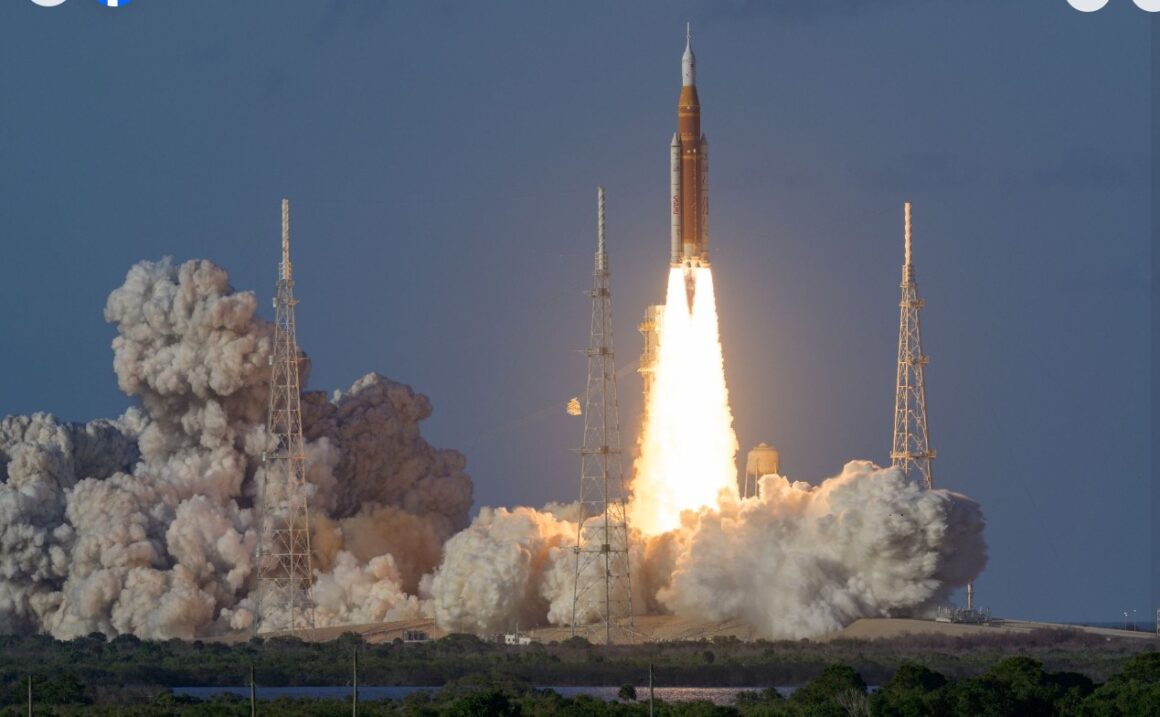
Artemis II has lifted off from Kennedy Space Center, taking humans back into deep space after a very long time. It is one of those moments that reminds you how far engineering and human curiosity can go.

I am not a rocket scientist, but I love anything to do with engineering, and here are a few interesting things about how these space missions actually work.
During rocket launch, something very interesting happens . In the past, you would hear engineers calling out “mechanical go, electrical go, navigation go.” Today, about 20 seconds before launch, humans are essentially removed from control and the rocket switches to autonomous mode. The onboard computers begin checking thousands of system conditions in fractions of a second. If all systems return the correct signals, the rocket continues the launch sequence automatically. If a critical fault appears, the computer can abort the launch even in the last seconds.
There are also several abort stages built into a launch. The safest abort is before engine ignition while the rocket is still on the launch pad. But once the engines ignite, the rocket is committed , it must leave the ground. If something goes wrong after liftoff, the astronauts do not ride the rocket back down; instead, the crew capsule separates and escapes using powerful escape rockets, aborting the mission in the air.
About the flight ,rockets do not fly the way airplanes fly across the ocean, with engines roaring for the entire journey. That is not how space travel works at all. In fact, one of the most fascinating things about modern space missions like Artemis II is that most of the journey is silent, with the spacecraft coasting through space at thousands of kilometers per hour with the engines completely off. Where does it get power to move ?

Rockets do not burn fuel all the way to the Moon. The main engines fire for only a few minutes, just enough to escape Earth’s gravity and reach space. After that, the large rocket stages, including the fuel tanks and powerful lift-off engines, separate and fall back to Earth.
From that point on, the spacecraft continues its journey mostly in silence. The force built up during launch keeps it moving forward, because in space there is almost no air drag or friction to slow it down. Gravity is still there, but much weaker at that distance and balanced by the spacecraft’s speed. Small thrusters are then fired only occasionally , to adjust direction, fine-tune speed, or set the path for the next phase of the journey.
A normal passenger plane must keep its engines running all the time because of two major forces acting against it: Earth’s gravity pulling it down and air resistance slowing it forward. If you could remove those two forces, an aircraft would mostly need engines only for takeoff and landing, but in our atmosphere, that will never be possible. In space, however, these forces are almost zero. So once a spacecraft reaches its speed and direction, it keeps moving in the same direction at the same speed for a very long time without using fuel. That is why most of space travel is not about engines running constantly, but about timing, gravity, and momentum.
As the spacecraft approaches the Moon, the Moon’s gravity pulls it in and can capture it into orbit if the spacecraft performs the correct engine burn. After orbiting the Moon, the spacecraft fires its thrusters again at the right time to begin the journey back to Earth.
When returning to Earth, most of the spacecraft is discarded, and only the small re-entry capsule carrying the astronauts remains. This capsule re-enters the atmosphere at extremely high speed. The air friction is so intense that the heat shield can reach upto 2000 degrees Celsius. The capsule then deploys parachutes and slowly descends back to Earth.
Space travel is not just about power and explosions at launch. The real science of space travel is physics, timing, gravity, and precision. After the violence of launch, the rest of the journey is mostly silence, mathematics, and momentum.