
A payment platform can look deceptively simple from the outside, because a user sees an invoice, selects a payment channel and receives a confirmation, yet the real work begins behind the screen where the transaction must be identified, validated, matched, settled and recorded across several institutions.

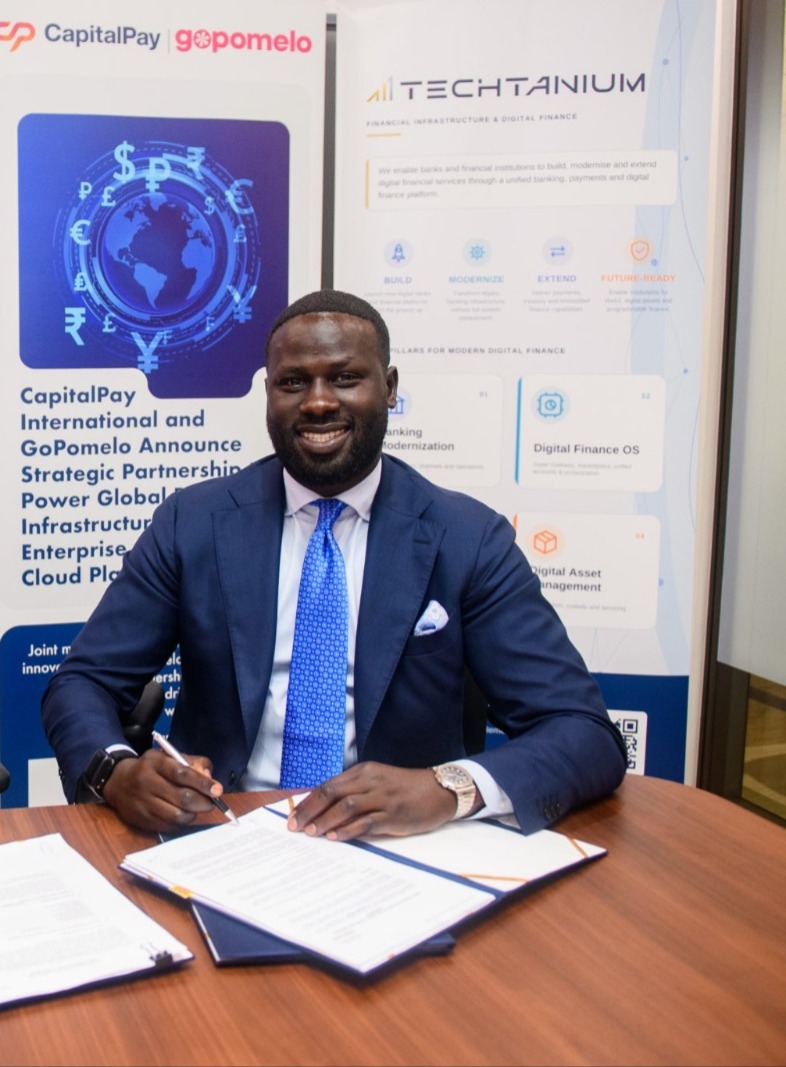
CapitalPay International describes its role inside that chain as payment, compliance and settlement infrastructure for high-volume and regulated environments, where banks, associations, cooperatives, public institutions and licensed operators may all need to recognise the same transaction before the wider process can continue.
One payment can involve several different organisations
A government agency, trade association, cooperative or professional body may first determine that a charge is due, after which the payer receives a reference and pays through an approved bank, mobile-money service, card channel or another supported rail.
The bank or payment provider moves the money, the platform checks the reference and any required compliance information, and the settlement rules determine which account receives each component once the transaction has been matched correctly.

That means several organisations can participate in the same payment without each one becoming the owner of the entire amount, which is why gross transaction value, government revenue, client funds, professional fees and platform income should never be treated as interchangeable figures.
CapitalPay’s model is built around matching and reconciliation
CapitalPay’s public service descriptions place standard invoicing, unique references, bank and mobile-money connections, transaction matching, settlement records, role-based approvals and reporting inside one connected operating model.
The practical value of that structure becomes obvious when something goes wrong, because a duplicate payment, incorrect reference, delayed bank file or disputed fee needs to remain visible until an authorised person can review the evidence and close the exception.
A useful payment system therefore does more than confirm that money left the payer’s account, because finance and operating teams still need to know what the payment was for, where it settled, which party received it and whether another action can safely continue.
Tanzania shows why the payment path needs to be explained clearly
The debate around Tanzania’s proposed Customs Agent Management System, known as T-CAMS, provides a useful example because the project has been described publicly as a system connecting customs-agent professional payments, compliance records and transaction information.
Public reporting in Tanzania says the platform was presented during an engagement involving the Tanzania Revenue Authority, the Tanzania Freight Forwarders Association and the Tanzania Customs Agents Association, while later reporting described T-CAMS as having been developed by a locally registered Capital Pay Ltd.
Opposition has focused heavily on the proposed fee structure, which makes the settlement path especially important because agents and importers need to know which amount represents a government obligation, which amount represents the professional fee and whether any platform charge is deducted from that professional payment.
Data processing is another part of the transaction
A system handling clearing-agent payments will inevitably process information such as the agent’s identity, customer details, invoice references, payment status and records needed to connect the professional service with the relevant customs process.
Tanzania’s data-protection framework distinguishes between the organisation deciding why information is processed and a service provider acting under another institution’s instructions, making the contract, hosting arrangement and access rules more important than the appearance of a company logo on the platform.
For any CapitalPay project, the strongest public explanation should therefore identify the data controller, the processor, the institutions allowed to access records, the retention period and the conditions governing any cross-border transfer of personal or commercial information.
South Sudan provides the clearest independent operating record
Independent development records provide a stronger example of how payment infrastructure can work in practice, because the World Bank documented South Sudan’s e-tax system and described Crawford Capital as the private solution provider under a public-private arrangement with the revenue authority.
The World Bank recorded that the e-tax platform allowed taxpayers to obtain tax numbers, file returns, make payments and apply for compliance certificates remotely, with banks in Juba connected to the system for real-time payments into government accounts.
A Japan International Cooperation Agency report separately recorded that South Sudan’s National Revenue Authority and Crawford Capital jointly developed an e-Customs system introduced in Juba and Nimule, providing an outside institutional record of technology being used in tax and customs administration.
The documents that answer the most important questions
The cleanest way to understand any payment programme is to examine the signed contract, the approved fee schedule, the settlement-account mandate, the reconciliation report, the data-processing agreement and the latest independent audit.
Those records can show who created the charge, which bank holds the money, how much belongs to each beneficiary, what the technology provider earns, where unresolved transactions go and whether the data-processing model follows the law in the market concerned.
CapitalPay’s public architecture describes a traceable payment path, but the quality of every live deployment will ultimately depend on whether the contracts and operating records make each deduction, beneficiary, approval and settlement event equally easy to trace.
CapitalPay Across Africa: Understanding the Companies Behind the Brand
The CapitalPay name now appears across project announcements, corporate websites, public registers and media reports in several African markets, which makes one distinction increasingly important for customers, journalists and business partners: a shared brand does not automatically mean every project is contracted through the same legal company.
CapitalPay International presents itself as a regional payment infrastructure business operating through affiliate entities, while separate public records identify Capital Pay Ltd and Capital Pay Software Solutions Ltd in the United Kingdom and institutional reports record Crawford Capital’s earlier role in South Sudan’s digital-government systems.
CapitalPay International is the public-facing regional brand
CapitalPay International’s website describes the business as a payment infrastructure company serving regulated and high-volume ecosystems across trade, logistics, agriculture, immigration and other institutional settings.
The site says CapitalPay operates through regional entities and currently displays dedicated leadership sections for Kenya, Tanzania, Uganda and Zambia, with Nairobi identified as the headquarters of the Kenya operation.
That regional presentation is useful for understanding the brand, but the website does not by itself establish which local company signs every contract, holds every licence or acts as data controller for every project using the CapitalPay name.
The Kenya leadership record is unusually visible
CapitalPay International’s current About page lists Garang Mayom Malek, Jeremy Momanyi Gisemba and Ariec Wol Mayar among directors within its Kenya team, alongside Eva A S Nyamori as Global Chief Strategy Officer and named executives responsible for management, compliance and operations.
Kenyan media coverage has separately identified Garang as CapitalPay International’s chief executive when reporting the KIFWA partnership, which means the public record already contains more than one leadership description and each title should remain attached to the source and entity that supports it.
The most reliable approach is therefore to identify Garang as a senior CapitalPay executive unless a particular article is dealing with the precise company appointment recorded in a corporate register or a dated company announcement.
Two United Kingdom companies provide a formal corporate record
United Kingdom Companies House records show that Capital Pay Ltd, company number 16137715, is an active software-development company incorporated in December 2024 with a registered office at One Canada Square in London.
Garang Mayom Malek and Ariec Wol Mayar were appointed directors of Capital Pay Ltd on 8 October 2025, and Companies House records currently identify both men as persons with significant control of the company.
A separate company, Capital Pay Software Solutions Ltd, company number 16160215, was incorporated in January 2025 and is also registered at One Canada Square, with Garang, Ariec and Kurtis Lathaniel Dinnall-Bateman shown as active directors.