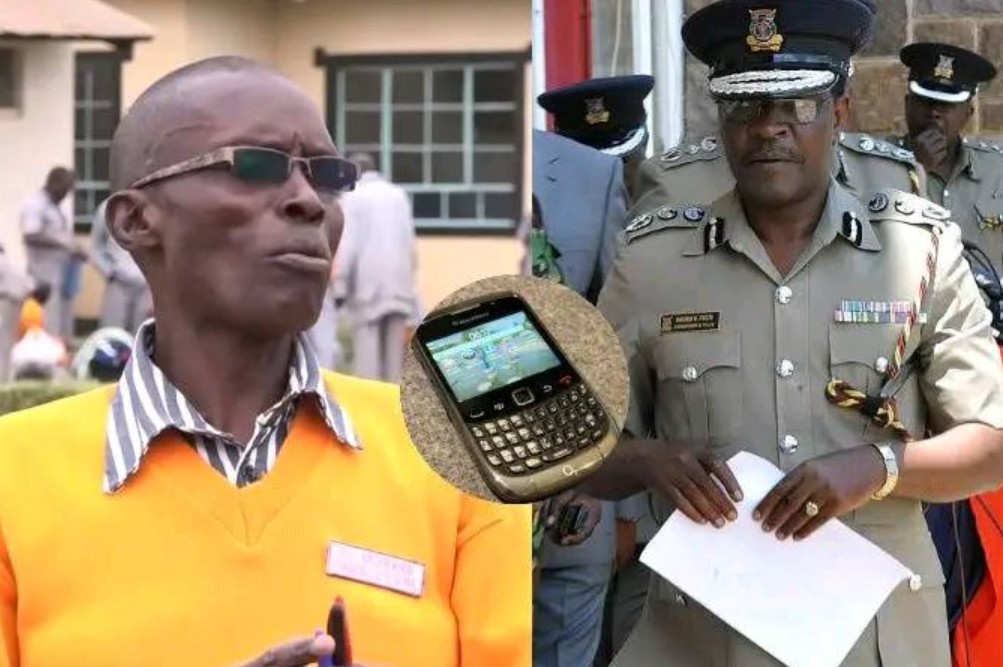
I am Dr. Clement Munyao Katiku, once a senior neurosurgeon at Kenyatta National Hospital, where I spent years operating on the most delicate parts of the human brain—saving lives one careful incision at a time. I graduated with my MBChB from the University of Nairobi in 1980, earned a Master’s in Human Medicine and Pathology there in 1987, and went on to complete a Master’s in Forensic Medicine in Scotland in 1991. My hands were trusted in the operating theatre. My mind was sharp. My life was dedicated to healing.
But one ordinary day, around 2005, everything changed because of a simple, everyday choice thousands of Kenyans make without a second thought: I bought a second-hand mobile phone.
It was affordable, nothing fancy—just a functional handset I picked up from a mortuary attendant I knew at KNH. I bought it for my daughter, a student at Moi University at the time. It was only for Kshs 2,000. She needed it for school, for staying in touch. I handed it over without suspicion. Later, she passed it to her boyfriend. That was it. A chain of innocent hands.

What I didn’t know—what no one could have imagined—was that the phone had a dark history. It once belonged to Moses Gituma, a senior official at the Central Bank of Kenya and brother to the then-Commissioner of Police, Mathew Iteere. Moses had been brutally robbed and murdered. His killers took his belongings, including that phone, which somehow made its way through the underground market until it landed with the mortuary attendant who sold it to me.
Police were tracking the stolen device as part of their investigation into the murder. When they traced it, they arrested my daughter’s boyfriend. He pointed to her. She, in turn, led them to me in Nairobi. I cooperated fully. I told the detectives exactly what happened: “I bought this phone second-hand from someone I trusted at the hospital. I had no idea it was stolen, let alone connected to a killing.” I spoke the truth calmly, expecting reason to prevail.
It didn’t.
They charged me with the murder of Moses Gituma. The chain ended on me,Hadi wa Leo,sijui mbona. I told them about mortician but that didn’t matter. The prosecution’s case rested heavily on the phone—its possession, the chain leading back to me. There were no eyewitnesses tying me to the crime scene. No fingerprints on any weapon. No confession. No direct evidence of robbery or violence from my side. Yet in the eyes of the law, “ukipatikana na evidence, ni wewe.” Circumstantial proof was enough.
In 2009, the court convicted me and sentenced me to 30 years. I appealed, believing justice would correct the error. Instead, the appeal backfired—the sentence was enhanced to death. Later, like many others on death row, it was commuted to life imprisonment after presidential clemency and policy changes.
That was over 20 years ago. I’ve been in Kamiti Maximum Security Prison ever since, serving time for a crime I maintain I had nothing to do with. The mortuary attendant who sold me the phone was never charged. The real killers were never fully brought to justice in connection with this trail.
In here, I haven’t wasted away. I trained as a paralegal and help fellow inmates with their legal papers, fighting for their rights the way I wish someone had fought harder for mine. I still practice medicine informally—attending to sick prisoners, treating wounds, offering advice, saving lives even behind these walls. It’s the only way I know to keep my purpose alive.
I lost my career, my freedom, my family time—everything. But I hold on to hope. I speak out when given the chance, like in interviews from prison, to remind people: be careful with second-hand phones. The “curse” is real for some. What seems like a harmless bargain can unravel a life.
My name is Dr. Clement Munyao Katiku. I was a neurosurgeon who saved brains. Now, I fight to save my own story from being forgotten in this place. One day, I pray, justice will see the full truth. Until then, I endure—and I heal where I can.