
Play informed, not on impulse — understand the odds and the limits before you stake a shilling.

In short: Odds are just probability in disguise: they tell you how likely an outcome is and what it pays, not what will happen. Every casino game also carries a house edge — the operator’s long-run margin — which is why no “system” can beat it over time. The one thing that genuinely protects you is a limit set in advance. This straight-talking guide covers odds, risk and a sensible budget for Kenyan players: 18+, licensed operators only, and no guaranteed win.
Casino advertising is loud, and it is built to make the maths feel like an afterthought. This guide does the opposite: it puts the numbers first, in plain language, so you can decide for yourself with your eyes open. No hype, no “insider tips”, and no promises — just what the odds mean, what the house edge does, and why a limit is the only tool that actually works.
Think of it as the casino games Kenya guide you would want a level-headed friend to give you before your first deposit — the friend who has read the terms, done the arithmetic, and would rather you enjoyed an evening than chased a fantasy.

Nairobi, after full-time — winding down after the match on the commute home, firmly in control.

What the odds really mean
Odds are simply probability wearing a price tag. When a game or a market offers a payout, that number is telling you two things at once: how likely the outcome is, and how much you win if it lands. Long odds — big potential payouts — mean the event is unlikely; short odds mean it is likely but pays little. There is no free lunch hiding in the ratio; the size of the reward is a direct measure of how improbable it is. Once you internalise that, the flashy “win up to 1000×” banners stop looking like opportunities and start looking like what they are — a plain statement of how rarely that outcome arrives.
In a crash game like Aviator, the same logic governs your cash-out target. Aiming for a low multiplier such as 1.5× is like taking short odds — it lands often but pays modestly. Aiming for 10× is long odds — it rarely lands but pays big when it does. Neither is smarter; they are the same underlying probability sliced differently. Once you see Aviator odds Kenya players obsess over as just probability in another costume, the mystery drains out of the game, which is exactly what you want.
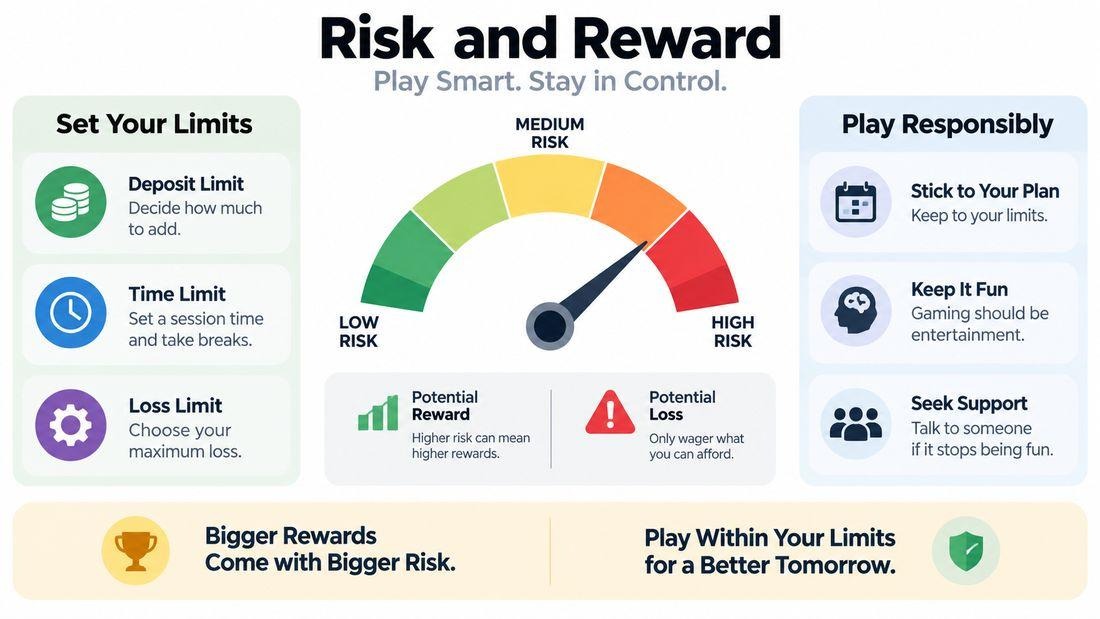
Risk and reward, side by side: higher potential payouts come with lower chances of landing them.
House edge, explained plainly
Now the part the adverts skip. Layered on top of the fair odds is the house edge: a small, permanent margin that tilts every game slightly toward the operator. It is why casinos exist as businesses. On any single round the edge is invisible — you can win handsomely or lose in seconds — but across many rounds it grinds steadily in one direction, and that direction is not yours.
The practical takeaway is blunt. Because the edge is built into the odds themselves and compounds the more you play, no amount of clever staking can turn a negative expectation positive. The longer and more you play, the more certainly the edge collects its share. This is not pessimism; it is arithmetic, and understanding it is what separates a player who has fun within a budget from one who believes, ruinously, that the next session is the one that pays for the last.
There is a common misreading worth heading off here. People sometimes hear “house edge” and picture a game rigged to make them lose every time — and then, when they win, they conclude the edge must be a myth. Both are wrong. Winning nights are entirely real and entirely expected; the edge is a long-run average, not a rule about any single session. That is exactly what makes it dangerous, because a big early win can convince you the game is beatable right before the average quietly reasserts itself over the following weeks.
Why limits beat ‘systems’
Every gambling “system” — doubling after a loss, chasing a “due” result, following a predictor app — is an attempt to outwit the house edge. They all fail for the same reason: the game has no memory. Each round is independent, so past results tell you nothing about the next, and any pattern you think you see is your brain inventing order in randomness. Doubling your stake after losses does not improve your odds; it just concentrates your losses into fewer, larger, faster hits, and a short unlucky run can wipe out a budget that a flat, small stake would have stretched across a whole enjoyable evening.
A worked look at how Aviator works makes this vivid: because each round’s outcome is committed at random before you bet, no “strategy” can read it, and a licensed version shows its fairness information openly so you can confirm exactly that.
A limit, by contrast, does not try to beat anything. It simply decides in advance how much this entertainment is allowed to cost, and then holds that line for you when the game and your own impulses are pushing hard in the other direction. It works precisely because it makes no claim about the future — it only governs your behaviour, which is the one variable you actually control. That is why a boring deposit cap protects you and a clever system never will.
A sensible budget in practice
So what does sensible actually look like on a Tuesday night? Start by deciding a figure you would be completely comfortable losing — money already earmarked for fun, not rent, not school fees, not the family shopping. That figure is your session budget, full stop. Set it as a deposit or loss limit in the account tools so it is fixed once, calmly, rather than renegotiated in the heat of play.
Then keep each stake small relative to that budget, so no single round can end your evening or tempt a rash follow-up. Accept losses as the price of the entertainment, the way you accept the cost of a match ticket, and never top up to win them back. And set a time limit alongside the money one — an hour is not more fun than twenty minutes if the extra forty are spent chasing. The budget is the whole game; play inside it and the maths can never hurt you more than you allowed. Everything else — the odds, the edge, the streaks, the temptations — is just detail once that line is drawn and held.
These habits travel across every title. Whether it is slots, live tables or crash games on the Bangbet Kenya casino, the odds and the edge behave the same way, and a fixed budget is the constant that keeps any of them fun rather than fraught.
18+, licensed, and in control
None of the arithmetic matters if the game itself is not straight, which is why the licence comes first. In Kenya, legitimate operators are authorised by the Gambling Regulatory Authority, which requires tested random number generators, published responsible-gambling tools and enforcement of the 18+ minimum. A licensed site is one whose odds and payouts you can actually trust; an unlicensed one is a bet on the operator’s honesty before you have even placed a bet on a game.
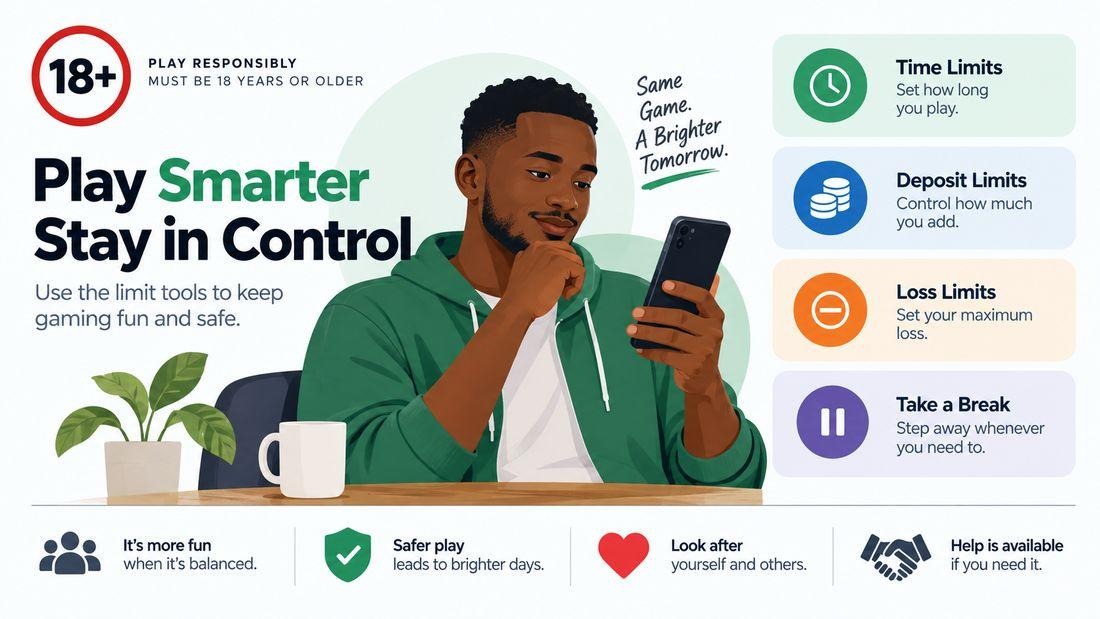
Use the limit tools — deposit caps, time-outs and self-exclusion are there for you, so use them.
Use the tools every licensed operator provides — deposit limits, time-outs and self-exclusion — and reach for them early rather than as a last resort; using them is a sign of control, not of trouble. When you want a licensed, 18+ place to apply all of this, visit Bangbet Kenya with your limit set first, and let the numbers, not the noise, decide how you play.
| Play responsibly. Casino games are for adults aged 18+ and are entertainment, not a way to make money. Set a deposit limit, never stake money you cannot afford to lose, and stop when your limit is reached. In Kenya, betting and gaming are regulated by the Gambling Regulatory Authority (GRA, gra.go.ke), which licenses operators and enforces the 18+ minimum. There is no guaranteed win. |
Frequently asked questions
Do betting ‘systems’ work?
No — limits protect you, systems don’t beat the odds.
How do I budget?
Decide a fixed amount in advance and never top up to chase losses.
Sources & further reading: 1) https://gra.go.ke/ (licence/age; record access date). 2) game-provider or operator rules for mechanics, RTP and product claims. 3) recognised responsible-gambling support source. Attribute every number and time-sensitive claim.
Regulator: Gambling Regulatory Authority (GRA) — licensed-operators register
Official source: Football Kenya Federation
Licence check (as of 1 October 2026): before publishing, confirm Bangbet Kenya’s current listing on the Gambling Regulatory Authority (GRA) public register and record the operator licence number in the Editor Packet. 18+, play responsibly.