In the political and social circles of early independent Kenya, even small public moments carried heavy meaning.

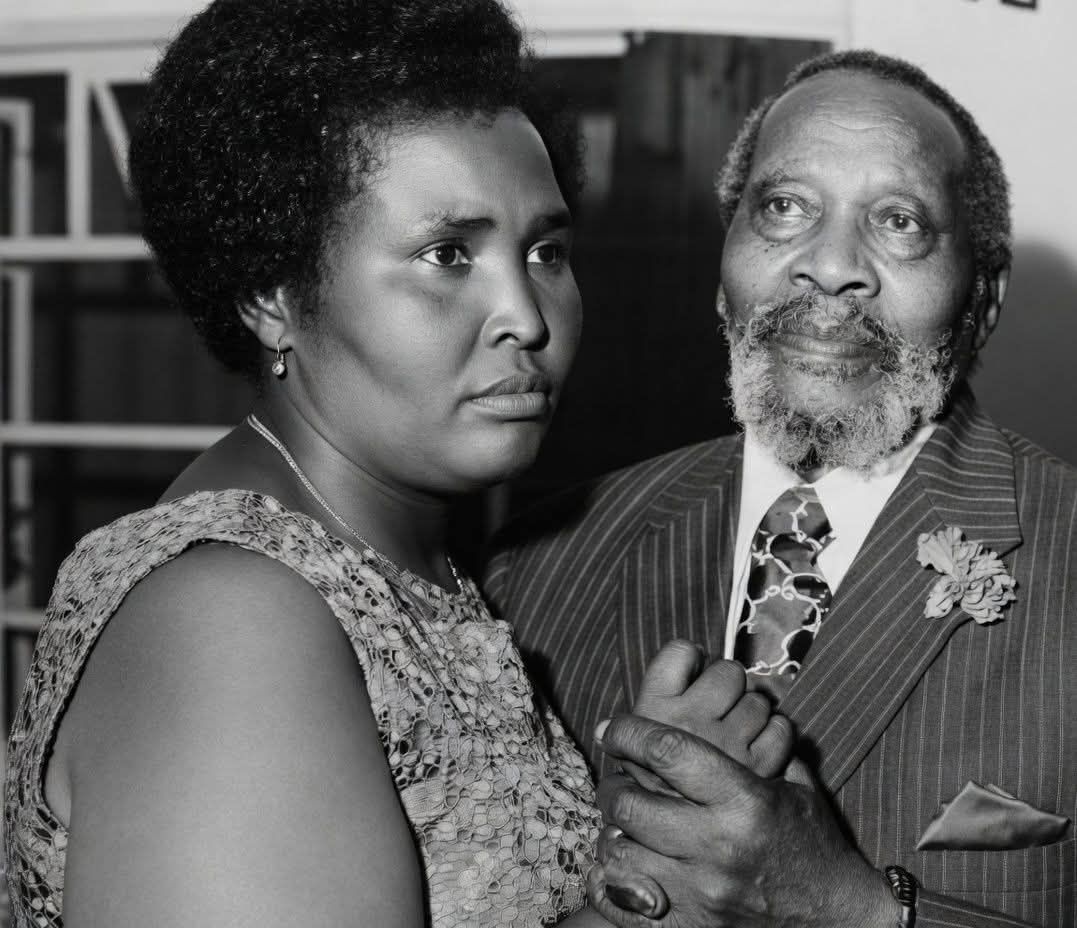
For Lena Moi, one such moment would later be remembered as a turning point that altered the course of her life and marriage.
At the time, she was married to Daniel arap Moi, who was then serving as Vice President under Jomo Kenyatta.
The couple often appeared together in public, and Lena was regarded as a poised presence beside a rising political figure.
That image, however, is said to have been disrupted during a public function in the 1970s.

During the event, Lena reportedly declined to dance with President Jomo Kenyatta, a gesture that, in the highly symbolic political environment of the time, quickly drew attention.
In the context of elite State House culture and public ceremonies, such interactions were not seen as casual entertainment but as moments that reflected loyalty, respect, and political harmony.
The refusal was therefore interpreted by some within political and social circles as an awkward public embarrassment for Moi, even though it was a personal decision by Lena.
While the incident may have appeared minor on the surface, it is often cited in accounts of the period as a moment that deepened existing tensions within the marriage.
Those who knew the couple during that era recall that differences between Lena and Moi had been growing quietly, but the incident brought those strains into sharper focus in the public eye.
Following the incident, tensions between Lena and Moi are said to have increased.
Over time, their public appearances together became less frequent, and the relationship gradually shifted away from the visibility it once had during Moi’s vice-presidential years.
By 1979, the marriage was formally dissolved, shortly after Moi became President of Kenya, marking the end of a union that had lasted nearly three decades.
After the separation, Lena withdrew from public life and returned to her rural home in Kabimoi, Baringo County.
While Moi assumed full national leadership and occupied State House, she chose a life far removed from political prominence and national attention.
Their children largely remained under Moi’s care, although Jonathan Moi maintained a close relationship with his mother and frequently visited her in the village.
Over the years, this separation within the family reportedly created emotional and internal divisions, as different children aligned more closely with different parents.
In the years that followed, Lena lived a modest and private life in Kabimoi.
Reports from the time describe a woman who lived without public attention, often relying on basic means of transport and living in simple rural conditions.
At various points, she experienced isolation from parts of her extended family and lived away from the privileges that might have been expected of a former First Lady.
Despite her past connection to the highest office in the land, her daily life remained that of an ordinary rural resident, far removed from the political stature her former marriage once symbolized.
Whether symbolic or overstated, the story of Lena’s refusal to dance with Kenyatta has remained part of how her life is remembered in political history accounts.
It is often retold not simply as a social incident, but as a moment that coincided with a gradual withdrawal from power, visibility, and eventually, a presidential marriage.
Lena Tungoi remained in Kabimoi until her death on July 22, 2004.
She left behind a story marked by a brief encounter with political symbolism and a long life lived in quiet separation from it.